

Science-Backed Longevity Strategies for Men
A curated knowledge base for men committed to living longer, stronger, and sharper — grounded in peer-reviewed biology and clinical research from around the world.
Key Longevity Insights Every Man Should Know
Our editorial board distills the most impactful findings from global longevity research into clear, actionable knowledge pillars.
Cellular Longevity
Telomere health and mitochondrial function are among the most studied markers of biological age in men.
Cardiovascular Resilience
Heart health remains the single most impactful factor in male healthspan, according to decades of longitudinal research.
Cognitive Preservation
Lifestyle interventions begun in midlife show measurable impact on neuroplasticity and memory sharpness in later decades.
Immune Robustness
Chronic low-grade inflammation, often called "inflammaging," is now recognized as a core driver of accelerated male aging.
How Modern Biology Is Rewriting the Rules of Male Aging
For much of the twentieth century, aging was considered an inevitable, linear decline — a fixed trajectory that men could do little to influence beyond basic hygiene and diet. That view has been fundamentally overturned. Researchers at institutions across Asia, Europe, and North America have demonstrated that biological age and chronological age are often strikingly different, and that the gap between them is profoundly modifiable.
Epigenetic clocks, senolytics research, and precision nutrition science have transformed longevity from a philosophical aspiration into a measurable, data-driven discipline. Men in Indonesia and across Southeast Asia are increasingly engaging with these findings, seeking evidence-based frameworks rather than generic wellness advice.
Our editorial mission at Agingdefybioscience is to bridge the gap between academic research and daily practice — translating dense scientific literature into clear, actionable reading for the health-conscious modern man.
About Our Editorial Board
Your 3-Phase Longevity Optimization Protocol
Our research team has structured the most robust longevity evidence into a sequential, phase-based reading pathway designed for men at any starting point.
Biological Assessment
Understand the markers that define your current biological age. Our articles cover epigenetic testing, inflammatory biomarkers, metabolic panels, and how to interpret these results in a meaningful way. Phase one is about building a clear baseline picture of where you stand today.
Lifestyle Architecture
Design the daily habits and environmental conditions that support long-term cellular health. This phase covers evidence-based strategies in sleep optimization, resistance training protocols, time-restricted eating, and stress modulation — all contextualized for men living in tropical climates like Indonesia.
Advanced Cellular Strategies
Explore the frontier of longevity science — senolytics, NAD+ metabolism, autophagy induction, and hormonal optimization. Phase three articles are written for readers who have established solid lifestyle foundations and are ready to explore emerging research with nuance and critical thinking.
Core Longevity Strategy Topics
Browse our structured editorial categories covering the most evidence-rich areas of male longevity science.
 Sleep Science
Deep Sleep Architecture & Testosterone
Discover how slow-wave sleep cycles directly regulate anabolic hormone secretion in men. Research shows that chronic sleep disruption accelerates biological aging markers more rapidly than almost any other lifestyle factor — and the good news is that the damage is largely reversible with targeted interventions.
Read More Nutrition
Time-Restricted Eating & Cellular Autophagy
The science of meal timing has evolved well beyond calorie counting. Intermittent fasting protocols — particularly 16:8 and alternate-day approaches — have been shown to upregulate autophagy, the body's cellular self-cleaning process that clears damaged proteins and organelles linked to age-related disease.
Read More Cellular Health
NAD+ Metabolism & Mitochondrial Vitality
NAD+ (nicotinamide adenine dinucleotide) has emerged as one of the most studied molecules in longevity research. Its decline with age correlates closely with reduced mitochondrial efficiency, impaired DNA repair, and diminished cellular energy — three processes that are central to how men age at a biological level.
Read More Hormones
Testosterone, Cortisol & the Hormonal Aging Cascade
Male hormonal decline is not a single event but a multi-decade cascade affecting energy, body composition, libido, mood, and cardiovascular risk. Our editorial deep-dives examine how lifestyle inputs — from zinc-rich diet choices to specific training protocols — influence the hormonal environment without pharmaceutical intervention.
Read More Movement
Strength Training as a Longevity Drug
No single intervention in the longevity literature has the breadth of evidence that resistance training does. Building and preserving muscle mass directly protects against metabolic disease, insulin resistance, and the frailty that defines late-life decline. This article explores optimal training volume, frequency, and recovery for men at every age.
Read More Mental Resilience
Stress Biology, Purpose, & Psychological Longevity
Chronic psychological stress activates cortisol pathways that accelerate telomere shortening and systemic inflammation. Research into "ikigai" — a Japanese concept of purposeful living — and its measurable effects on longevity biomarkers has generated global scientific interest. This article examines what the data actually says about stress, meaning, and male lifespan.
Read More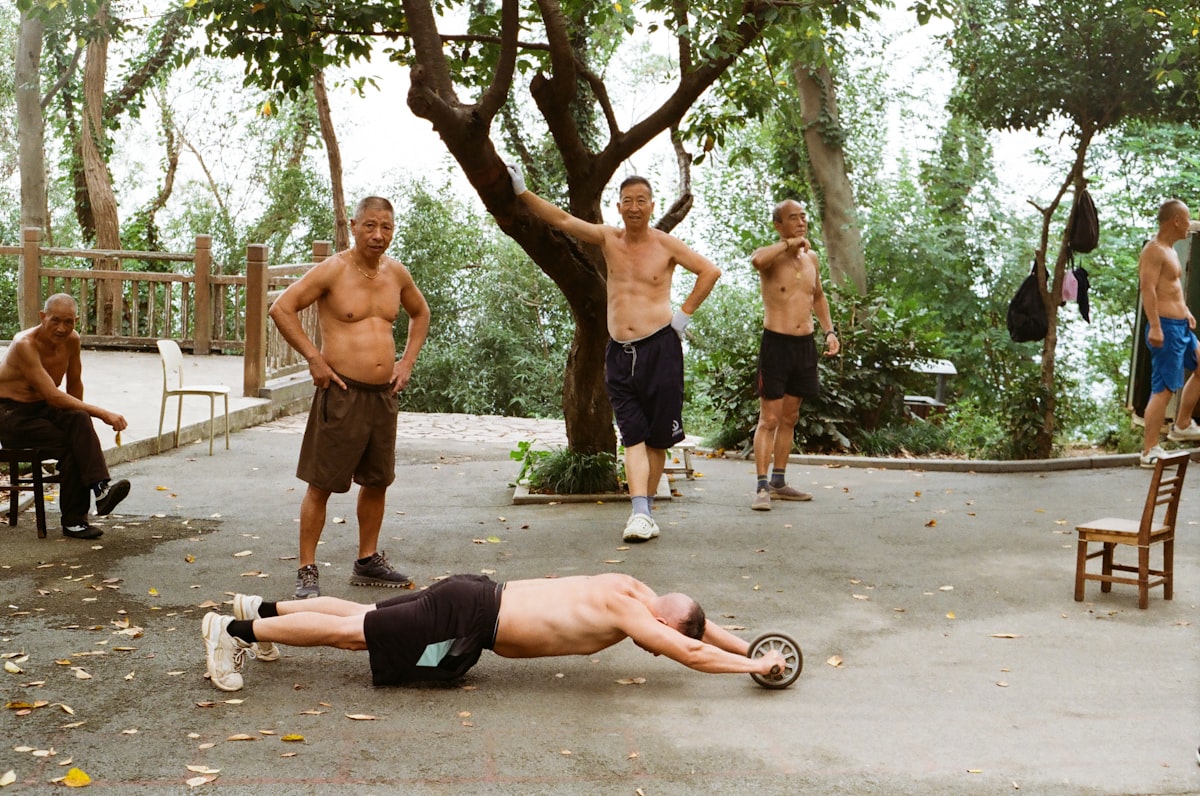 Nutrition
Gut Microbiome Diversity & Immune Aging
The gut microbiome of centenarians shares measurable characteristics — high microbial diversity, specific anti-inflammatory species, and robust short-chain fatty acid production — that are largely absent in individuals who age with significant disease burden. This article reviews what men can realistically do to cultivate a longevity-associated microbiome.
Read More Cellular Health
Hormetic Stress: Cold Exposure & Heat Therapy
Hormesis — the principle that low-dose stressors trigger adaptive responses that strengthen the body — is one of the most compelling frameworks in longevity biology. Cold immersion and sauna therapy have both accumulated substantial evidence bases linking regular use to reduced cardiovascular mortality, improved insulin sensitivity, and enhanced mood regulation in men.
Read More Cellular Health
Epigenetic Reprogramming: Reversing Biological Age
The Yamanaka factor discoveries opened a new chapter in aging science — demonstrating that cells do not have to remain locked in their aged epigenetic state. While full reprogramming remains experimental, partial epigenetic interventions are already showing early promise. This editorial piece reviews what the current evidence supports and what remains speculative.
Read More